|
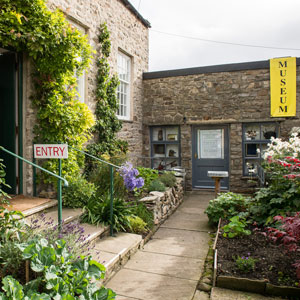
The Museum is on the corner of Reeth Green, down from the Post
Office. It is open November to Easter - Sundays 10.30 to 5.30. Easter to
end of October - Wednesdays, Thursdays, Fridays, Sundays and Bank Holiday
Mondays 10.30 to 5.30. Please call us for opening at other times. Groups very welcome, specialised
tours and hands-on sessions available.
The museum also has accomodation availiable. For more information, click here.
13 small silver shields were brought into the Museum last month, 10 of which
are engraved, the first 'Fremington 1924' the last 'Marske 1933', other shields
bear the names: Reeth 192, 1930. 1931), Gunnerside (1925), Downholme (1926),
Marrick (1927, 1928), Arkengarthdale (1932). Do you know what triumphs these
plaques commemorate, and where is the trophy and plinth to which they were
attached? If you have any ideas, or even a photograph let us know!
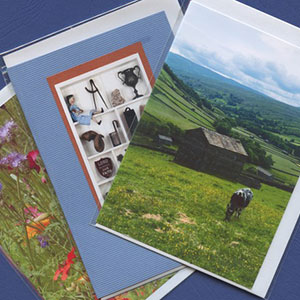
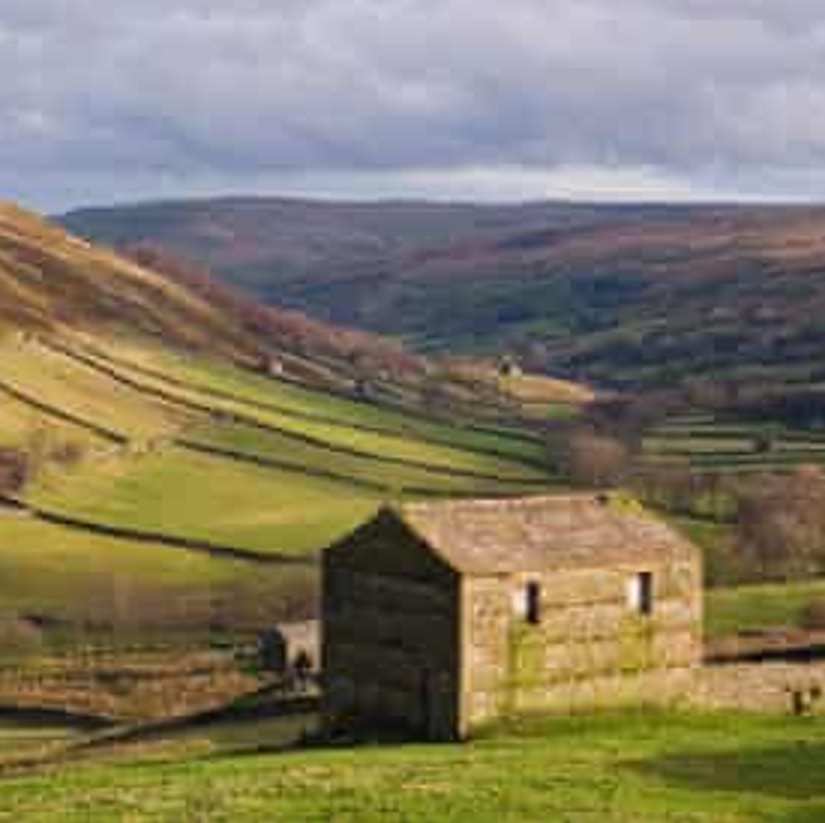
Swaledale & Arkengarthdale are the most northerly of the beautiful Yorkshire
Dales. The austere beauty of its hills and moors and fast flowing becks
remain much as seen by the invading Romans and Vikings and the raiding
Scots. But the stone farm houses and barns, mile upon mile of stone walls
and the abandoned mine workings remind us of the inhabitants of more recent
generations who gained their livelihood from the landscape. With the
closing of the lead mines in the late nineteenth century due to the
importation of cheap Spanish lead, almost half the population packed their
belongings and began their journey to seek work in the mills and mines of
the West Riding, Lancashire or Durham or overseas to Spain and the Americas.

The MUSEUM was opened in 1974, and is based in the old Methodist School,
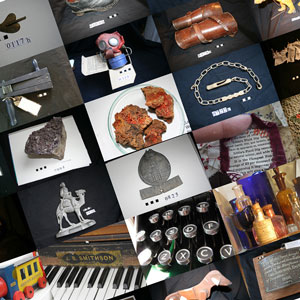
which took its first pupils in 1836. It is a fascinating repository of over
1,000 objects connected with living and working in the Dale. If you want to
learn about LEADMINING this is the place for you, where lead and its
associated rocks, minerals and fossils were yielded up by the hard labour of
the miners. You can see the TOOLS they used, trace their progress through
the landscape via nineteenth century MAPS, and imagine what it must have
been like to work underground with only candlelight for a guide. SHEEP
FARMING has been the mainstay of Swaledale agriculture since Tudor times.
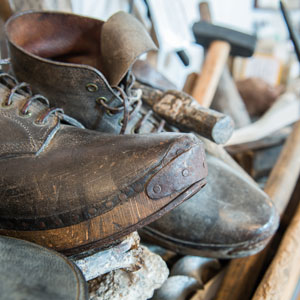
As a thriving community the Dale was also home to many skilled TRADES &
CRAFTS: tinsmithing, joinery and stonemasonry, all represented in the
Museum. While work was hard outside, it was no less easy inside.
There are displays of DOMESTIC EQUIPMENT from washing tubs and dollies to
early electric irons. Keeping the house clean, and the family fed was a
labour intensive job, but did not preclude time for ENTERTAINMENT. The
strange iron spring with a spike is for playing KNURR & SPELL. There are
nineteenth century quoits, and a whole section on the local BRASS & SILVER
BANDS. There are many OLD PHOTOGRAPHS which show Reeth as it was in the
early twentieth century, and faces that are still familiar.

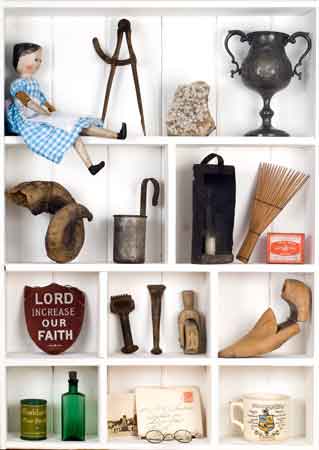
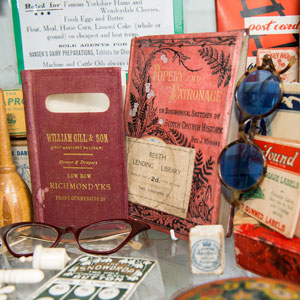
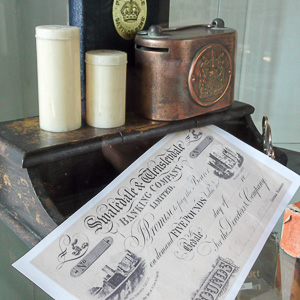
There are many CURIOSITIES, the pair of what look like wooden scissors are
glove stretchers, and a beautiful ivory tube, a container for sovereigns;
the small walnut wood case is a lady's snuff box. Do you remember
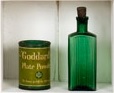
Lingford's baking powder, we have a tin, but what is Seidlitz powder? Have
you seen a SPOKE DOG, and what is it for? Would you be able to identify
clogging tools? What is a STICKLE PRICKER?
We invite you to come and explore our Museum and discover a past which is
not so very far away, but which is all too easily forgotten.
|